
Did you know that 90% of global startups fail at some point in their lifecycle? And that only 0.05% of startups secure venture capital funding, which is about 1 in 2,000?
However, the depressing nature of these statistics does not mean that it’s not even worth trying. Building a startup in 2026 is a viable option to consider, still it means making decisions that won’t block growth later.
One of the most critical choices founders must make is selecting a decent software development company for a startup.
The right provider helps validate ideas, launch MVPs faster, adapt to market feedback, and scale without endless rewrites. The wrong one, on the contrary, can slow down the process, inflate development costs, or lock you into technical debt before the product even finds its audience.
What Startups Need from Custom Software Development Companies Today
For startups, a software development partner is rarely just an external team writing code.
According to Forbes, in 2022, global funding fell by 35% compared to 2021. The price of a mistake has always been high, but now it’s extremely high, especially for companies in the early stages of funding.
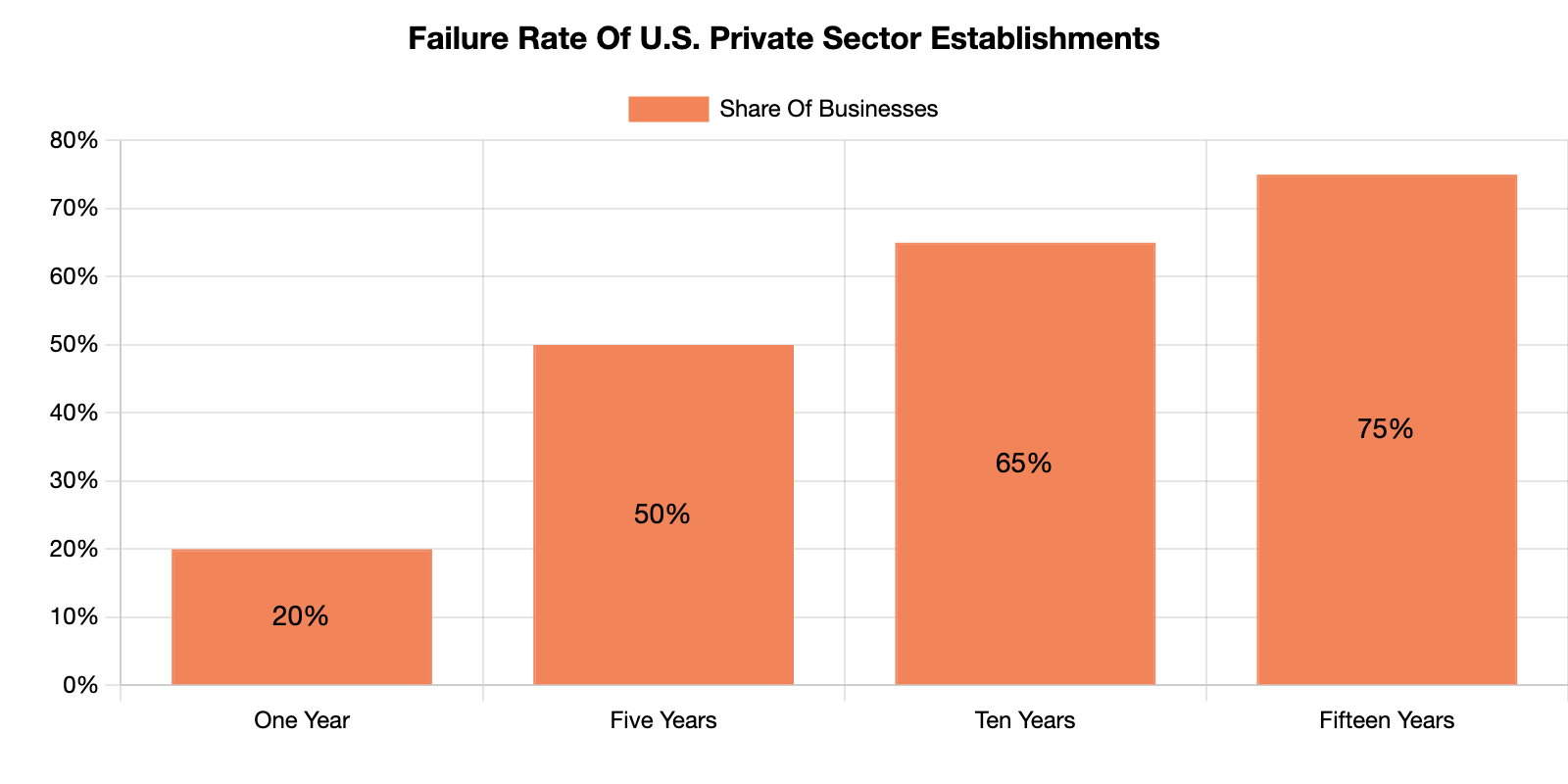
Now, startups need partners who understand the pressure of limited time, constrained budgets, and constantly shifting product assumptions. The ability to think in terms of business value and product outcomes is just as important as technical expertise.
First of all, startups need a product-driven mindset. This means helping validate ideas, challenging unnecessary features, and focusing on building an MVP that can reach the market without sacrificing the foundations required for future growth.
A strong partner understands how to balance speed with long-term technical decisions, avoiding shortcuts that later turn into costly rewrites.
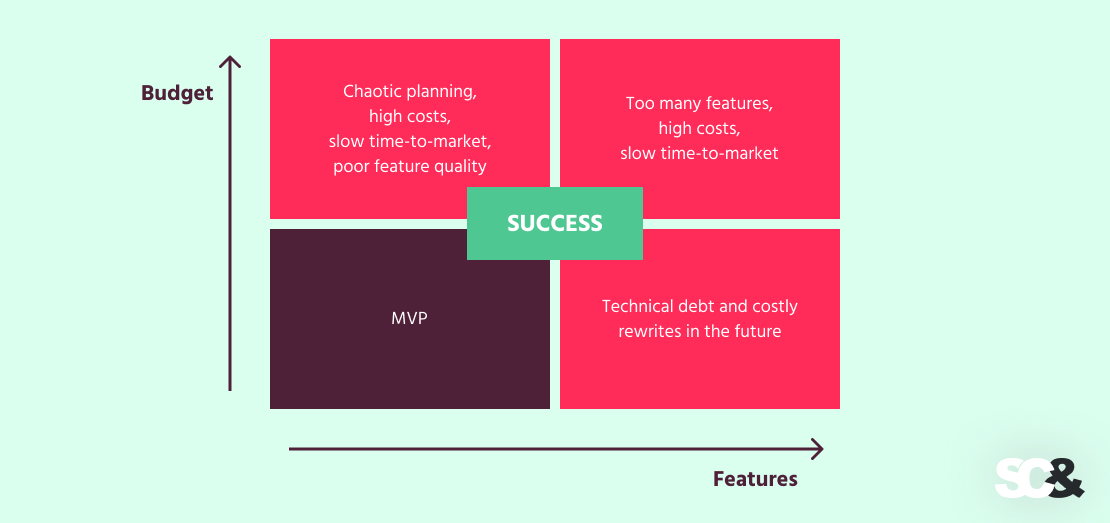
Modern startups also expect deep technical competence across current and emerging technologies. This includes cloud-native architectures, scalable backend systems, modern frontend frameworks, mobile development, and AI-driven features.
At the same time, decisions made in technology must be based on reality, not market hype.
Lastly, startups need to have partners that can grow along with them. As the product evolves, the development team needs to have the capability to handle scaling, optimization, and security, among other things.
A good software development team is a lifelong partner – one who can assist a startup from validation through to growth.
How We Selected the Top Providers for Startups
To place the top software development service providers for startups in 2026, we focused on factors that matter most at early and growth stages, rather than on sheer company size or brand recognition.
Our goal was to highlight partners that unfailingly demonstrate the ability to work in fast-moving, high-uncertainty environments and produce visible results.
A major criterion was a startup-friendly approach. We looked for companies with proven experience in MVP development, product discovery, and early-stage validation.
Providers that actively contribute to product strategy, help select features, and understand how to balance speed with future scalability ranked higher than those focused purely on implementation.
We also evaluated engagement model flexibility. Startups rarely operate with fixed scopes for long, so we prioritized providers offering adaptable collaboration models, such as fixed-price MVPs, dedicated teams, and team or skill augmentation.
Finally, we considered verified reviews and real-world outcomes. Public client feedback, documented case studies, and long-term partnerships with startups played an equally important role in our assessment.
Providers with a clear track record of producing working products, supporting growth, and maintaining strong client relationships were favored over those relying solely on marketing claims.
The List: Top 10 Software Development Companies for Startups (2026)
According to market statistics, in the US only, there are approximately 39,500 to 46,000 companies specifically classified under “custom computer programming services”.

In this section, we highlight the top software development partners that stand out, namely for startup founders.
Each of these companies brings something unique to the table, whether it’s deep technical expertise, a startup-centric mindset, adaptable engagement models, or a track record of delivering strong products.
1. SCAND
SCAND stands out as a full-service software development company, providing support to startups at all stages, from the initial idea to scaling and long-term maintenance.
With over 25 years of experience and 900+ delivered projects, SCAND offers a full range of services, including custom software development, web and mobile application development, enterprise systems, and advanced analytics platforms.
The company assists startups in quickly launching MVPs, developing cloud architecture, and incorporating AI-driven functionalities like prediction and automation.
Above all, SCAND has vast experience in a variety of sectors, such as fintech, healthcare, gambling & gaming, logistics, e-commerce, and sports betting. The company provides both the required technical and domain expertise.
Strong sides
- High emphasis on product thinking and scalability
- In-depth knowledge of .NET ecosystems and advanced architectures
- Experience in MVP development & legacy modernization
- Focus on development and testing using AI or automation
- High attention to security, compliance, and code ownership
Core services
2. IT Craft
IT Craft brings a wide portfolio of software development and consulting services, with more than 20 years of industry experience and over 2,250 successful projects delivered.
Their offerings cover everything from startup MVPs and POCs to full-blown enterprise systems, which makes them a versatile partner for founders who want both technical depth and startup-friendly processes.
IT Craft specializes in web apps, mobile solutions (native and cross-platform), DevOps and infrastructure optimization, AI integrations, and dedicated team models.
On top of that, the company takes projects across many industries (healthcare, fintech, logistics, and e-commerce, etc.), helping startups scale without unnecessary overhead.
Strong sides
- Long track record of startup and SMB projects
- Strong QA culture and well-systematized development processes
- Ability to rescue or refactor underperforming products
- Broad industry experience
Core services
- Custom software & website development
- Mobile app development (iOS, Android, hybrid & cross-platform)
- MVP, discovery & product consulting
- DevOps & cloud infrastructure
- AI development
- Staff augmentation & dedicated development teams
- Quality assurance & automated testing
3. Octaria
Octaria blends startup coaching, strategic guidance, and practical software leadership to support founders throughout their path from early concept validation to sustainable scaling.

Instead of just being the development hub for the projects they take on, Octaria also looks to advise on the decisions and strategy, especially for the teams that need direction and structure alongside development.
Strong sides
- A high level of strategic involvement that goes beyond writing code.
- Individually adjusted development and training processes.
- Clear communication and alignment with the company founders.
- A focus on quality execution that connects product development results with business growth.
Core services
- Product design and strategy
- Custom software development and architecture planning
- Mobile and web app development
- Product scaling and optimization
4. MTechZilla
MTechZilla positions itself as a practical technical co-founder for early-stage startups, combining fast solution implementation with strategic development.
Since 2021, the company has been supporting startups in MVP development, web and mobile app development, UI/UX design, and cloud solution deployment.
MTechZilla accentuates agile development methodology, rapid iterations, and transparent progress reporting to guarantee that startup founders maintain control over product development direction and budget.
Strong sides
- MVP and PoC delivery focus
- Startup-friendly pricing and processes
- Agile, feedback-driven development approach
- Hands-on collaboration with founders
Core services
- MVP and PoC development
- Web and mobile development
- UI/UX design
- Startup product consulting
- Cloud application development
5. Goji Labs
Goji Labs uses a design-and-strategy-first approach, pairing technical development with product insight. They are ideal for startups that look for help in defining a user experience and aligning product features with market needs.
Goji Labs is involved with co-creating product roadmaps with founders by balancing usability, performance, and business priorities for each project. Its focus on design thinking minimizes rework and quickens adoption.
Strong sides
- UX and product strategy emphasis
- Close collaboration with founders
- High focus on usability and clarity
- Suitable for consumer-facing products
Core services
- Product strategy & roadmap workshops
- UI/UX design & prototyping
- Web & mobile application development
- Feature prioritization and usability testing
6. Wildnet Edge
Wildnet Edge is known for its ability to scale engineering resources, offering expertise in full-stack development, cloud systems, artificial intelligence capabilities, and back-end performance optimization.
They help startups accelerate development, solve complex integration challenges, and implement new technologies without the hassle of recruiting.
Their flexible resource allocation model is particularly attractive to startups with constantly changing requirements.
Strong sides
- Large talent pool with potential for team scaling
- Experience with AI and advanced technologies
- Various engagement options
- Ability to support complex, multi-module products
Core services
- Full-stack software development
- AI/ML integration services
- Cloud infrastructure & DevOps
- Real-time systems & API integrations
- Team scaling & augmentation
7. Origami Studios
Origami Studios is recognized as a development agency for new entrants and growing companies that need to move fast from idea to market-ready product.

Their main strength lies in transforming business concepts into functional, scalable software through rapid minimum viable product (MVP) development, clear product planning, and comprehensive implementation.
In terms of services, the company combines custom software engineering with UI/UX design, cloud-ready architectures, and iterative delivery processes.
Strong sides
- High level of strategic involvement
- Customized development processes
- Strong communication and alignment with startup teams
- Premium execution quality
Core services
- Product design and strategy
- Custom software development
- Web and mobile application development
- Product scaling and optimization
8. Cleveroad
Cleveroad offers comprehensive software development services geared toward both early and later-stage startups.
Their expertise ranges from full-stack web and mobile app development to backend integrations, API services, and long-term maintenance. Cleveroad’s strength lies in building rich solutions ready for expansion, as well as dedicated teams that function as extensions of startup engineering units.
Strong sides
- Flexible engagement and pricing models
- Substantial mobile and web expertise
- Experience across multiple startup domains
- Fast team onboarding
Core services
- Full-stack product development
- Native & cross-platform mobile apps
- API design & backend services
- DevOps & cloud hosting setups
- Ongoing support & iteration
9. Binary Studio
Binary Studio focuses on assembling dedicated engineering teams that integrate with startup leadership. Rather than delivering isolated projects, they build long-term development units that grow with the product.
This approach is especially useful for startups planning larger roadmaps or evolving internal engineering needs over multiple releases.
Strong sides
- Strong team-building and retention model
- Long-term partnership focus
- High engineering standards
- Good cultural alignment with startups
Core services
- Dedicated development teams
- Custom software development
- Web and mobile applications
- Product scaling support
10. Technext
Technext is often selected by startups looking for reliable development at competitive rates. The company provides practical engineering support and staff augmentation, making it suitable for early-stage startups with limited budgets.

Strong sides
- Cost-effective development services
- Reliable execution for defined scopes
- Flexible staffing options
- Suitable for early MVP stages
Core services
- Web application development
- Mobile app development
- Staff augmentation
- Maintenance and support
| Company | Team Size | Key Strengths | Best Startup Stage | Regions |
| SCAND | Large, scalable | Cloud, full-stack, AI, enterprise systems | MVP → Scaling | Global |
| IT Craft | Large | Custom software, web/mobile, DevOps | MVP → Growth | USA & EU |
| Octaria | Small–Mid | Product strategy, startup coaching | Early → PMF | USA |
| MTechZilla | Small–Mid | MVPs, UI/UX, cloud apps | Early & MVP | Global |
| Goji Labs | Boutique | UX-driven product design | Early stage | USA |
| Wildnet Edge | Large | AI, full-stack, rapid scaling | MVP → Growth | Global |
| Origami Studios | Small–Mid | MVPs, strategy, UX | Early & pre-PMF | USA |
| Cleveroad | Mid-sized | Web & mobile, dedicated teams | MVP → Scaling | EU & USA |
| Binary Studio | Mid-sized | Dedicated long-term teams | Scaling | Europe |
| Technext | Small–Mid | Cost-efficient development, staff augmentation | Early stage | Global |
Comparative Overview of Top Startup Development Companies (2026)
How to Choose the Right Software Developers for Your Startup
Apart from technical expertise, the right software development firm should match your startup’s current stage, product goals, and growth plans, while also being able to move with you as the business matures.
Understanding Startup Needs
Every startup stage comes with different priorities, and a development company should be selected with those realities in mind.
At the pre-seed stage, the focus is usually on idea validation and speed. Startups need help shaping the product concept, building a lean MVP, and testing assumptions with real users as quickly as possible. Flexibility, product thinking, and fast iteration matter more here than heavy processes.
At the seed stage, the product already exists in some form, and the goal shifts toward improving stability, usability, and market traction. Development providers should be able to refine the architecture, improve UX, and support rapid feature iteration while keeping future scalability in mind.
By the time a startup reaches Series A, expectations significantly change. Investors look for technical maturity, security, performance, and a clear scaling path.
At this stage, startups benefit from partners with strong engineering discipline, cloud expertise, DevOps practices, and experience supporting growing user bases without disrupting the product.
Software Development Services That Matter Most
Although service offerings vary, some capabilities are invariably critical for startups across stages.

MVP development and prototyping help turn ideas into testable and budget-friendly products. A good partner knows how to shortlist core features and avoid overengineering early versions.
UX/UI design plays an equally major role in user adoption, especially for early-stage products.
Development teams that integrate design thinking into the build process help startups produce intuitive, user-focused experiences rather than purely functional tools.
Over time, cloud infrastructure, DevOps, and scalable architecture become indispensable. The right partner helps the product tolerate high traffic, new features, and integrations without frequent rewrites or downtime.
Above all, it’s necessary to pay attention to after-sales service and further product development. Startups need ongoing support to troubleshoot problems, optimize performance, and adapt the product based on user feedback and market changes.
Engagement Models
Understanding engagement models helps startups control expenses and mitigate risks.
Fixed-price models are ideal when the scope is well-articulated, for example, when developing an MVP or a PoC. They provide predictability but not much flexibility if the scope alterations are desired.
Time and Materials contracting offers more flexibility. Start-up companies are billed for actual work completed, making it perfect for products that are constantly faced with shifting priorities.
Staff augmentation involves a long-term collaboration where engineers join your startup’s team and work exclusively on your product. This model provides strong continuity, deep product understanding, and faster execution.
How to Evaluate a Software Development Partner
After you have a list of possible development agencies for your startup, the next step will be to ensure that you are able to assess their capability of meeting your objectives.

Evaluation should go beyond sales presentations and focus on practical evidence, working style, and long-term compatibility.
A great place to begin is to ask for case studies. In particular, look for examples that are similar to your startup stage or industry and technical complexity.
Effective partners should easily describe the problem they solved, the choices they made, and the outcomes they achieved. “We solved a problem” style is generally a warning sign.
It’s equally important to check the technical fit with your product roadmap. This means confirming that the partner has real experience with the technologies you plan to use now and later, and can explain their sprint structure, planning routines, backlog management, and review processes in simple terms.
Regular demos, clear milestones, and continuous feedback loops are essential for startups where conditions can quickly change or disappear.
Last but not least, communication and timezone alignment can make or break a partnership. Even highly skilled teams struggle if collaboration is slow or fragmented. Clarify how often you’ll communicate, who your main points of contact will be, and how overlap in working hours is resolved.
Budget & Pricing Guidelines
Budget allocation plays a crucial role in the process of choosing a software development team.
Startups should strive to find a solution that is not necessarily the cheapest, but one that will help them quickly test the viability of their idea and ensure sustainable development.
In the early stages and during pre-seed funding, budgets are typically centered around developing a minimum viable product. At this stage, speed, core functionality, and product validation are more important than feature completeness.
Limiting the project extent helps control expenses and reduces the risk of overspending before market demand is confirmed.
Later, at the seed stage, budgets typically expand to cover product refinement, improved UX, and infrastructure stability. This is where investing in better architecture, automated testing, and cloud optimization starts to pay off.
Cutting corners at this stage often leads to higher costs later when a product needs scaling.
At the Series A funding stage, expectations regarding pricing change. Now you’re paying not only for development time, but also for the maturity of the engineering solutions.
The budget should include expenses for scalable architecture, security, DevOps, performance optimization, and lasting support.
Partners with more streamlined processes and highly qualified specialists may cost more, but they reduce technical debt and operational risks.
Above all this, always factor in hidden and long-term costs. Maintenance, cloud infrastructure, post-launch fixes, and future feature development should be included in budget planning from the very beginning.
A good partner will help you estimate these costs in advance and avoid unpleasant surprises in the future.
Frequently Asked Questions (FAQs)
How do we know which software partner is right for our startup stage?
The right partner depends on the startup’s current stage and priorities. Early-stage startups often benefit from partners that specialize in MVP creation, UX design, and flexible, small teams that can iterate quickly. Growth-stage startups, on the other hand, need partners with expertise in scalable architectures, cloud infrastructure, and dedicated engineering teams capable of handling higher user demand.
How do engagement models work, and which one is suitable?
Engagement models vary to fit different project types and startup needs. Fixed-price projects work best for clearly defined scopes. Time-and-materials arrangements allow flexibility for digital products where priorities may shift. Staff augmentation means adding skilled software developers to your existing team for as long as you need them. These developers work as part of your team, focus on your product, and help you move faster without the cost and effort of full-time hiring.
How should we evaluate a software partner before committing?
Evaluation should focus on evidence of past performance, technical alignment, and collaboration processes. Startups should review case studies relevant to their stage and product type, confirm the partner’s tech stack aligns with current and future needs, and assess their delivery approach.
How much should startups budget for software development?
Budgets vary by stage. Early-stage startups typically spend $10,000–$50,000 on MVPs to validate concepts. Seed-stage startups often invest $50,000–$150,000 for product refinement, UX improvements, and cloud infrastructure. Series A startups may spend $150,000–$500,000 or more for scaling, mature architecture, DevOps, and ongoing support.