
In many ways, generative AI has made finding information on the Internet a lot easier. Instead of spending time scrolling through Google search results, people can quickly get the answers they’re looking for with a simple natural language prompt. However, sometimes people have questions that require recent information, and because LLMs are trained on past data, they can be limited in what information they can provide.
SerpApi is a company that aims to bridge this real-time data gap by providing a simple API that can scrape Search Engine Results Pages (SERPs), like Google, Bing, Amazon and more than 100 search engines, so that developers can connect the new data to an LLM.
How SerpApi Bridges the Gap
These AI applications can take in user prompts and determine if they require access to real-time data. If it decides the prompt won’t need updated data to come up with a response, it will direct the LLM to use its own knowledge, and if it does need some newer information, the application can send a search query to SerpApi to get fresh data, such as recent news, product data, or facts beyond the model’s knowledge cutoff date.
“In short, SERP data provides real-time, external context that developers can combine with LLMs to build applications that stay up to date with what’s happening on the web,” said Noraina Nordin, technical content developer at SerpApi.
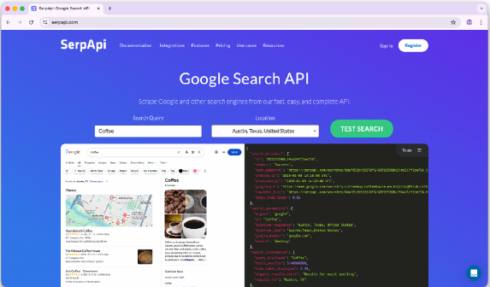
For example, if a user asks for the “macbook neo starting price” the model will determine that it needs real-time data and will generate a search request to send to SerpApi. SerpApi then makes a structured request to search engines and other online sources, then converts the
results into JSON, with titles, snippets, URLs, prices, reviews, summaries, and more, stored as objects. Finally, the LLM analyzes that structured data and uses it to generate up-to-date, informed responses.
Making a Search Request
This flow can be triggered with a single GET request. Here’s what that looks like for the “macbook neo starting price” query:
https://serpapi.com/search.json?engine=google&q=macbook+neo+starting+price&location=United+States&google_
domain=google.com&gl=us&hl=en&api_key=YOUR_API_KEY
Breaking down the key parameters:
– engine : The search engine (eg: google, google_maps and etc)
– q : The search query string
– location : The localized results to a specific country/region
– gl / hl : The country and language of the results
– api_key : Your SerpApi authentication key.
Why Not Just Scrape it Yourself?
According to the company, developers trying to build their own tools for this often find that scraping the web is the hardest step of this process, because search engines are often changing their layouts, adding anti-bot protections, and setting rate limits. This creates a lot of
ongoing maintenance overhead to keep it working as intended, SerpApi explained.
“SerpApi handles all the messy, time-consuming parts of scraping for you: navigating search engine HTML, bypassing blocks, rotating proxies, managing CAPTCHAs, parsing results, and turning them into clean JSON. Instead of building and maintaining a complex scraping pipeline,
developers can simply call one API endpoint and get structured, reliable, real-time search data,” the company explained in a blog post.
Additionally, while many AI models now offer their own built-in web search capabilities, they are often designed for general usage and hide their decision-making. Developers, on the other hand, might want to build custom logic, such as how queries are generated; how many sources
to retrieve; how to filter, rank, or enrich results; when to store data; and how to combine search data with business logic.
Other benefits of SerpApi include consistent and repeatable output, flexibility to use any model, and the ability to perform a high volume of requests without running into limits set by AI companies.
Getting Started
SerpApi offers several tutorials to help get started quickly, including how to use function calling to access real-time data with the Gemini API or connect DeepSeek API with real-time data from the internet.
Users can test queries directly in the SerpApi Playground before writing any code, making it easy to explore available parameters and preview JSON output in real-time.