
Everything connected to the generative AI world moves fast, including AI agents. Take, for example, the Model Context Protocol (MCP) that agents use to access data and tools. The adoption rate of MCP is off the charts.
But can the new Agentic AI Foundation (AAIF) move quickly enough to standardize the entire agentic AI ecosystem, starting with MCP?
The buzz at the recent MCP Dev Summit shows they are off to a fast start, but significant challenges remain for enterprise adoption with security as the top concern.
The AAIF’s mission is to define the open standards for the agentic AI space “that the whole world will be able to adopt,” AAIF Executive Director Mazen Gilbert told SD Times. “When you move from experimentation to production, and you have a thousand people doing their own thing and showing you some cool demos and moving to production at scale, you do need an open standard. No one company can define it, and no one company can own it,” Gilbert added.
But can the AAIF move fast enough to prevent industry fragmentation? Many organizations and software companies are already resolving key issues with MCP and the broader agentic ecosystem outside of the AAIF.
Fast Adoption and Fast Growth
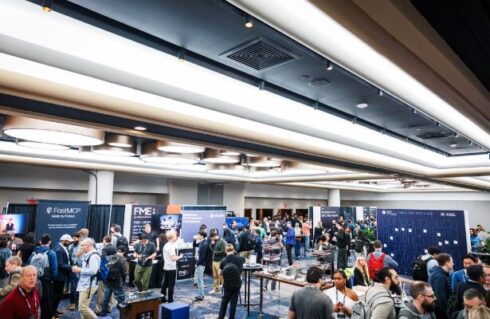
AAIF has grown to 170 members since it was launched in December, and attracted 1,100 attendees to its recent MCP Dev Summit in New York. “Ninety-seven new members joined in February alone,” said David Nalley of AWS, AAIF Governing Board Chair in his keynote. “AAIF already has seven working groups with more than five hundred participants,” he added. “The Identity and Trust Working Group has 150 members from 66 organizations.”
At a media roundtable with leading MCP maintainers from Anthropic, AWS, Microsoft, and OpenAI, panelists said that moving the specification to AAIF hasn’t changed much about their work process and that it’s helpful to have the broader perspective the AAIF members bring.
But MCP by itself represents only a part of the agentic AI landscape.
“MCP is the seed,” said MCP maintainer Nick Cooper, Technical Staff, OpenAI at the media roundtable. “The foundation has a broad mandate beyond just MCP.”
And even within the scope of the MCP specification itself, organizations are expressing key requirements for enterprise adoption, such as reliability, scalability, governance, and enhanced security. The maintainers said they are well aware of enterprise requirements, and AAIF is requesting proposals to sponsor working groups that address them. For example, enhanced security improvement is a key requirement for enterprise adoption, said MCP maintainer David Soria Parra, Technical Staff, Anthropic, and co-creator of MCP. “We’re happy to have AAIF bring the industry together and talk about the right solutions” across the agentic ecosystem.
Key Messages from Keynotes
In his keynote, Linux Foundation CEO Jim Zemlin talked about the industry’s rapid embrace of AAIF and announced a global event series for the AAIF, as well as expanded AgentCon + MCP Con events in Europe and North America in 2026. (The AAIF is a sub-foundation of the Linux Foundation.) Zemlin also introduced Angie Jones as the new Developer Experience lead for AAIF
Nalley in his keynote also presented the recently approved AAIF project life cycle (for standardization and announced that AAIF is soliciting new project proposals.
In Parra’s keynote he said they are tracking more than 110M SDK downloads per month for MCP, and noted that it took React around three years to achieve numbers similar to what MCP has achieved in 16 months. He said he is seeing massive adoption inside enterprise firewalls.
The MCP specification roadmap includes the following items, Parra said:
- Stateless transport — replacing stateful server-sent events (SSE) to facilitate hyperscaler-friendly deployments
- Task primitive — to support asynchronous and long-running agent operations
- Enterprise authentication — cross-org token exchange for seamless single sign on (SSO)
- Triggers — server-initiated interactions (for example, “I have new data, come engage”)
- Skills — bundling domain-specific knowledge with MCP servers
- SDK v2 for Python and TypeScript — featuring ergonomic cleanup and migration tools
Parra also said that the MCP working group is addressing the following agentic ecosystem challenges:
- Context bloat — using progressive discovery and tool search for deferred loading
- Composability — structured outputs that let models chain tool calls without round-tripping to inference