
FPV drone flying offers an immersive experience like no other, and the key to this thrilling perspective lies in the FPV goggles. With various models like DJI Goggles V1/V2 and Goggles 2, HDZero, Skyzone SKY04X, and Walksnail Goggles X on the market, understanding how to power them effectively is crucial for longer battery life. Let’s dive into the different powering methods for these goggles and explore the best options based on their voltage input requirements.

New to FPV Drone? Learn how to choose FPV Goggles in our buyer’s guide: https://oscarliang.com/fpv-goggles/
Finding Out Input Voltage Requirements
Different FPV Goggles might require varying battery voltages. Here are some of the most popular FPV Goggles and their input voltage ranges:
- DJI Goggles V1: 7.4V – 17.6V
- DJI Goggles V2: 11.1V – 25.2V
- DJI Goggles 2: Not specified (2S)
- HDZero Goggles: 7V – 25.2V
- Walksnail Goggles X: 7V – 26V
- Skyzone SKY04X: 6.5V – 25.2V
- Fatshark HDO2: 7V – 13V
How to Estimate Battery Life
To estimate battery life, you need to know two things:
- The capacity of the battery.
- The current draw of the FPV Goggles.
Battery life can be estimated by dividing the capacity of the battery by the current draw of your FPV Goggles. For example, the Walksnail Goggles X draws about 0.35A at 25V. This means a 6S 1000mAh LiPo would last roughly two and a half hours.
Dedicated 2S LiPo Battery

Many FPV Goggles, including older models from Fatshark, Eachine, Skyzone, and Aomway, support 2S input. Therefore, this Tattu 2S 2500mAh might be the safest option. This battery is specifically designed for FPV goggles and comes with a 5.5mm barrel connector (DC3.5). It features an LED battery indicator that shows the battery level. For more information, see my review: https://oscarliang.com/tattu-2s-2500mah-lipo-battery/
Get it here:
Li-Ion Packs
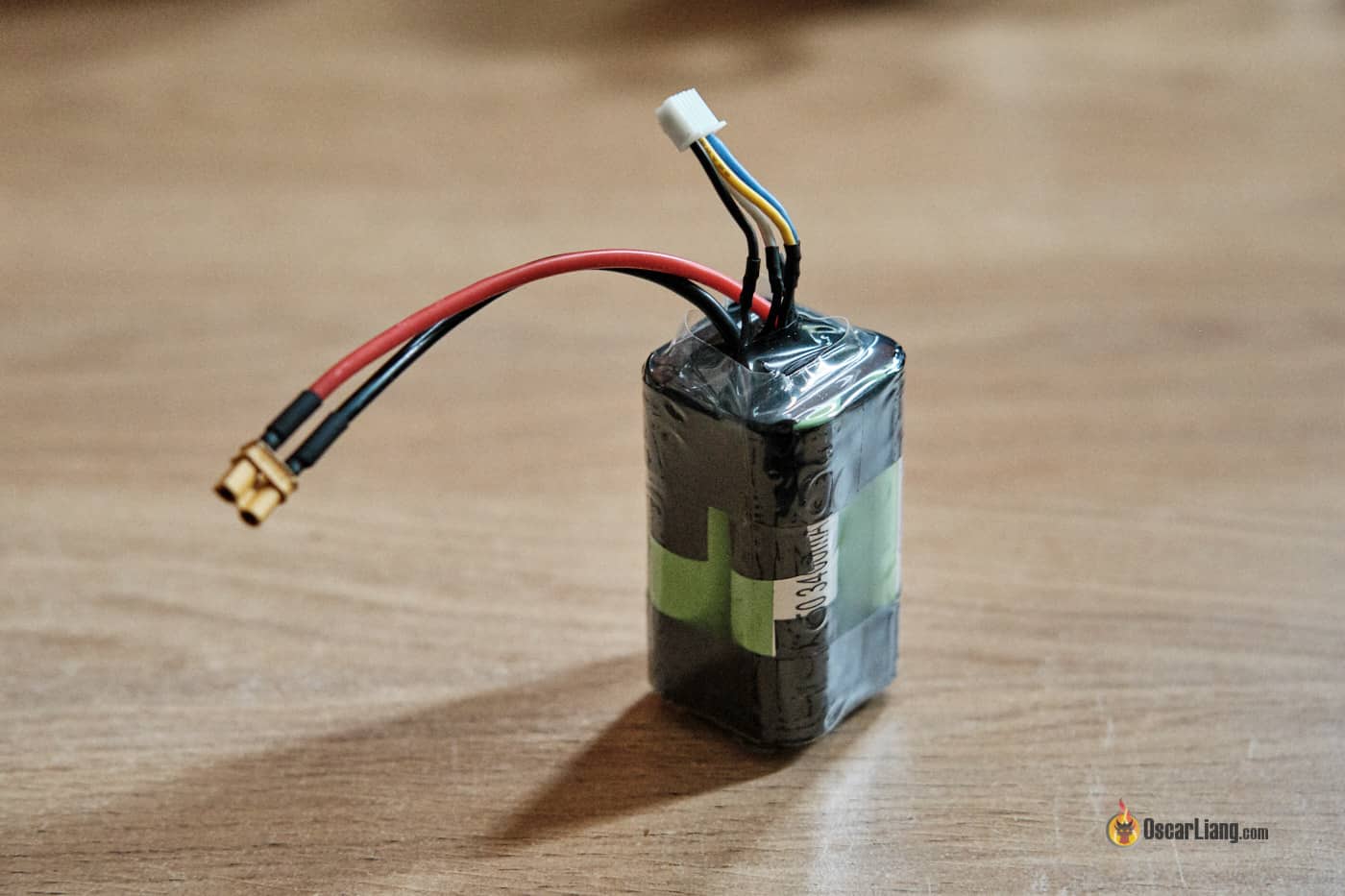
Personally, I prefer using Li-ion battery packs for powering FPV goggles because they have a higher energy density than LiPos. This means that for the same weight, Li-ion batteries last longer than LiPos. This is especially beneficial as FPV goggles don’t draw a lot of current, so the low discharge rate of Li-ion batteries is perfectly adequate.
The Auline 4S 2600mAh is a good option. Most modern goggles support a 4S input, and four 18650 cells aren’t too heavy to carry in your pocket while flying, yet they still offer excellent battery life.
Get the Auline 4S 2600mAh 18650 packs here:
Alternatively you can build your own from scratching using 18650 cells. From my 18650 batteries test, I’ve found these to be great cells.

Panasonic NCR18650B 3400mAh:
Molicel P26A/P28A 18650:
Sony VTC6 18650:
I have a step-by-step tutorial here demonstrating how to build such a battery pack: https://oscarliang.com/li-ion-battery-long-range/
Goggles BEC

This is essentially a step-down voltage regulator specifically made for powering FPV Goggles, particularly the DJI Goggles 2. I’ve been using this for almost a year and it’s proven reliable. See my review for the pros and cons: https://oscarliang.com/speedybee-goggles-bec/
Get it from:
Any 4S-6S Drone Batteries
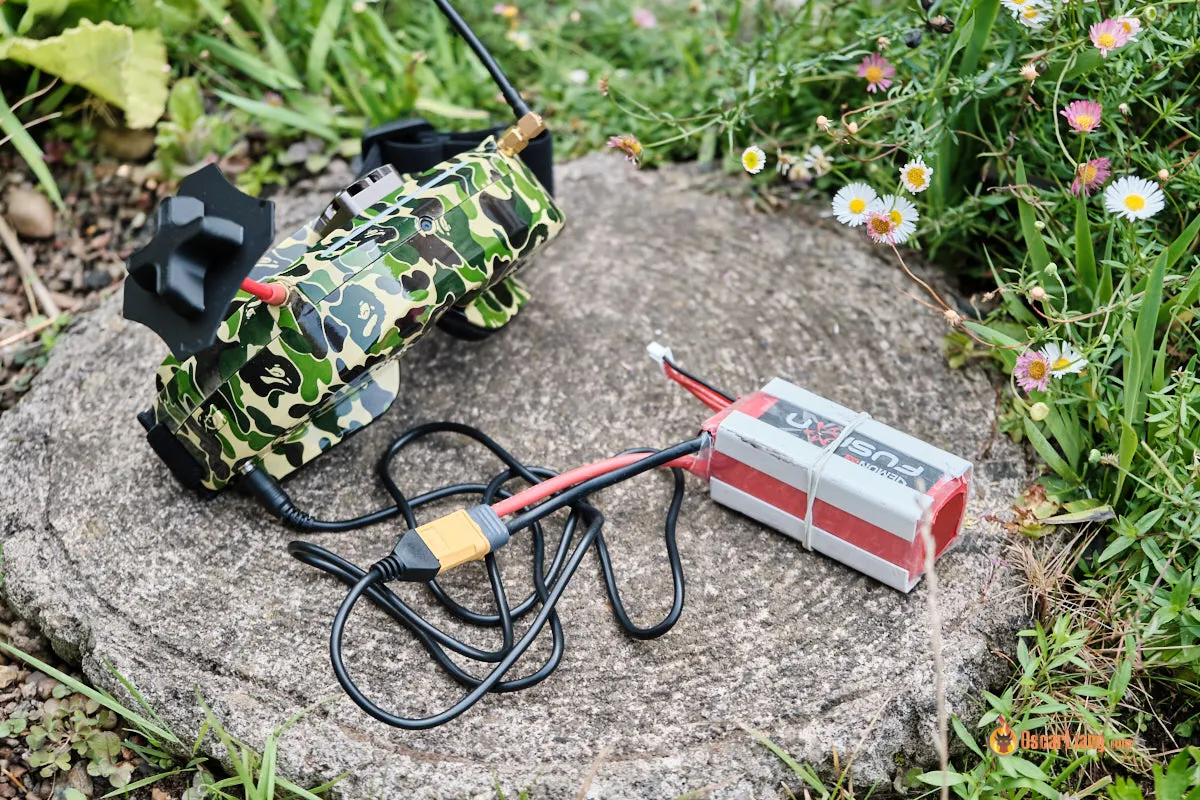
Since most goggles support 4S and even 6S, you might be able to use any 4S/6S drone batteries to power your goggles. However, ensure your goggles are compatible with the battery voltage before connecting.
Best Practices and Safety Tips
Regardless of the goggle model, it’s essential to consider the following best practices:
- Always use a battery with a voltage regulator when the maximum input voltage of the goggles is near the battery’s output voltage.
- Check the battery’s connector type and ensure it matches your goggles. Adapters are available but may add extra bulk.
- Consider the weight and size of the battery for comfort, especially during long flying sessions.
- Regularly inspect your batteries for any signs of damage or swelling. Safety is paramount in FPV flying.
- For extended sessions, having spare batteries or a portable charging solution can be incredibly useful.
Conclusion
Choosing the right power source for your FPV goggles is crucial for an uninterrupted and enjoyable flying experience. Whether you’re using DJI, HDZero, Skyzone, or Walksnail goggles, selecting a battery that matches the voltage requirements and balances duration with comfort will enhance your FPV adventures. Always prioritize safety and check compatibility to ensure a smooth and immersive flight every time. Happy flying!
Edit History
- Feb 2018 – Post created
- Dec 2023 – Post re-written